I set out to build a marketplace. What I launched was a directory, and for two months I could not feel the difference. Then I spent two days at a stall in Mumbai, next to the people I had built it for, and it was the only thing I could see.
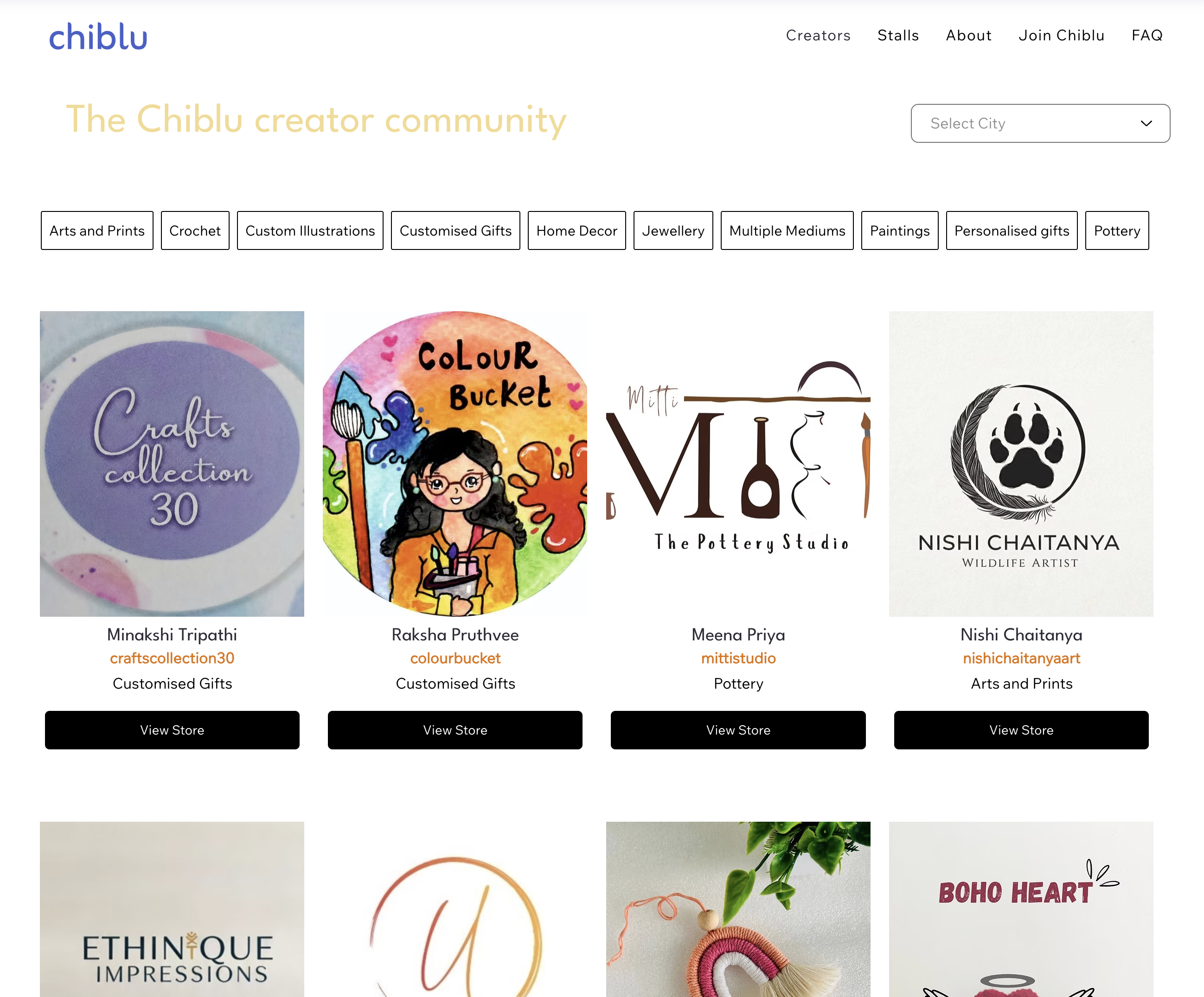
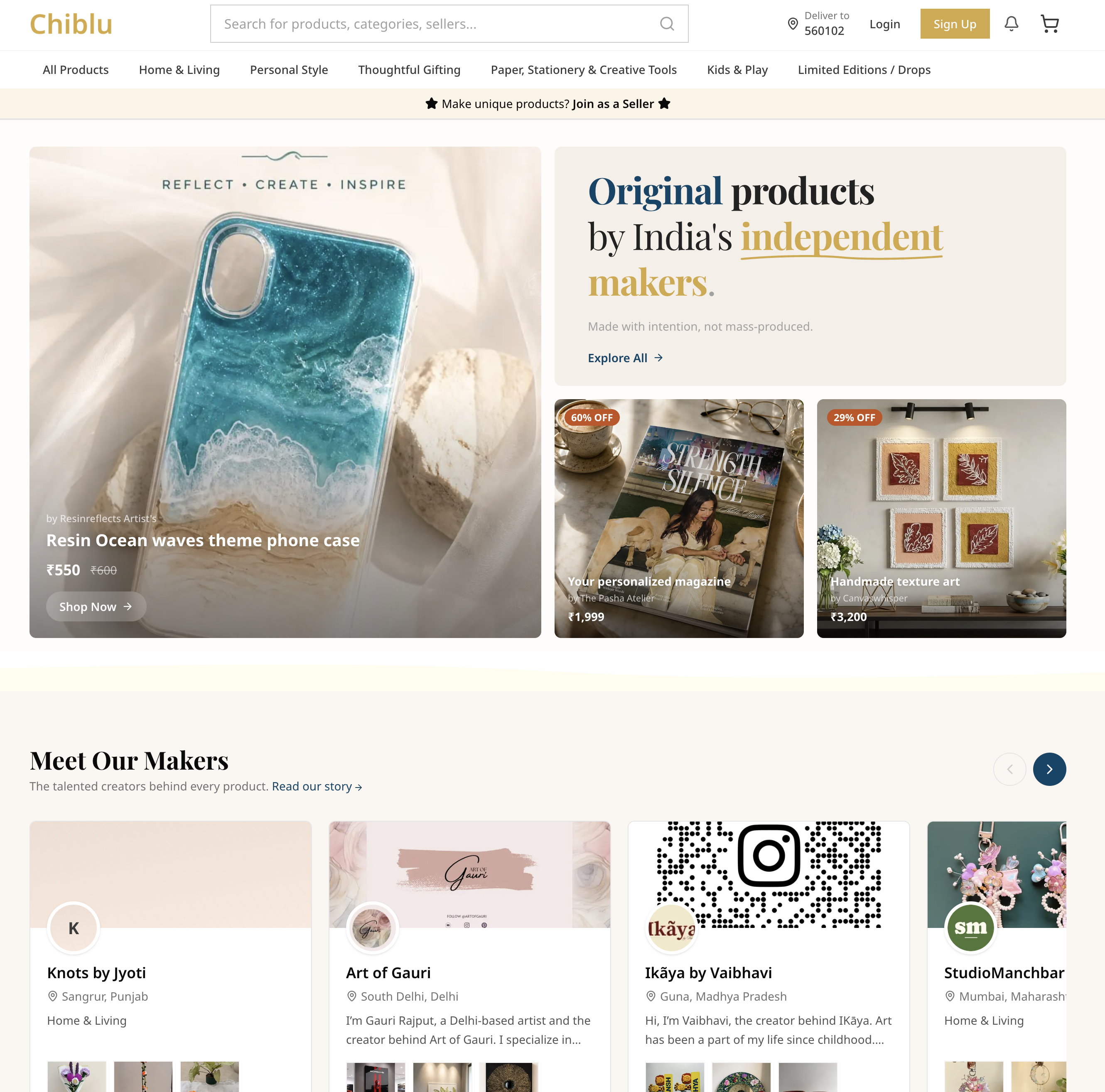
v1 of Chiblu was a list of makers. Bios, photos, a way to browse, contact, follow. You could find a maker on Chiblu. To buy from her, you left and took it to Instagram DMs.
It was free during pre-launch. I had not worked out how I would charge, and told myself I would sort that out once people showed up. By month two, 30+ makers had signed up. The dashboard looked right. The numbers were trending up. I took that as the product working.
Two days at a folding table
I had done the research that is easy to do. Forms, calls, a waitlist, plenty of makers telling me what they wanted. I knew what makers said. I had never sat next to one while she tried to sell something.
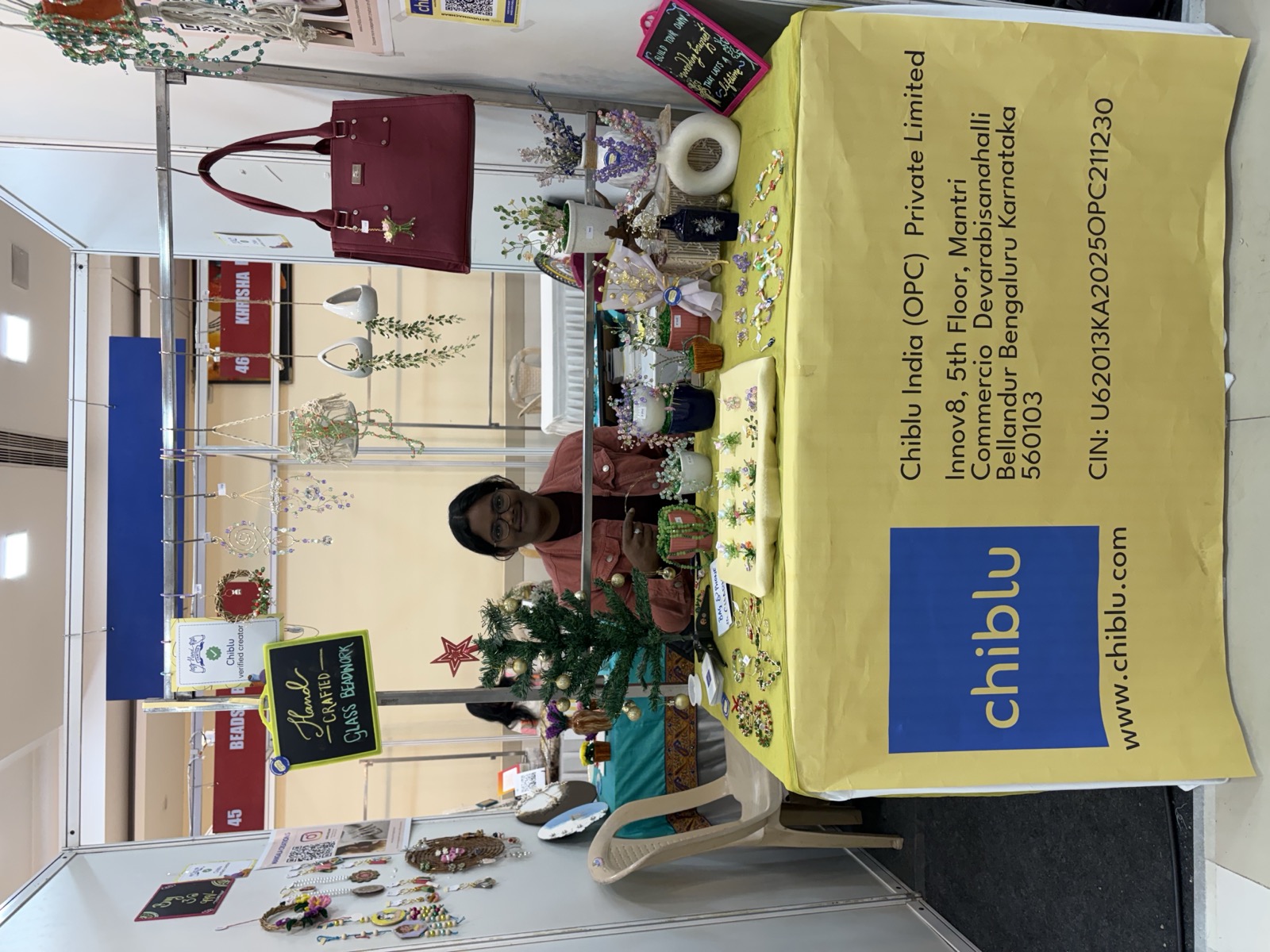
So in December 2025 I paid for a small folding table at a pop-up in Mumbai and set up in a row of stall owners running the exact businesses I was building for. The plan was to demo Chiblu to makers walking past. Instead the maker in the next stall started talking to me, then the one across from me, then a textile artist who had heard I was building something for people like her.
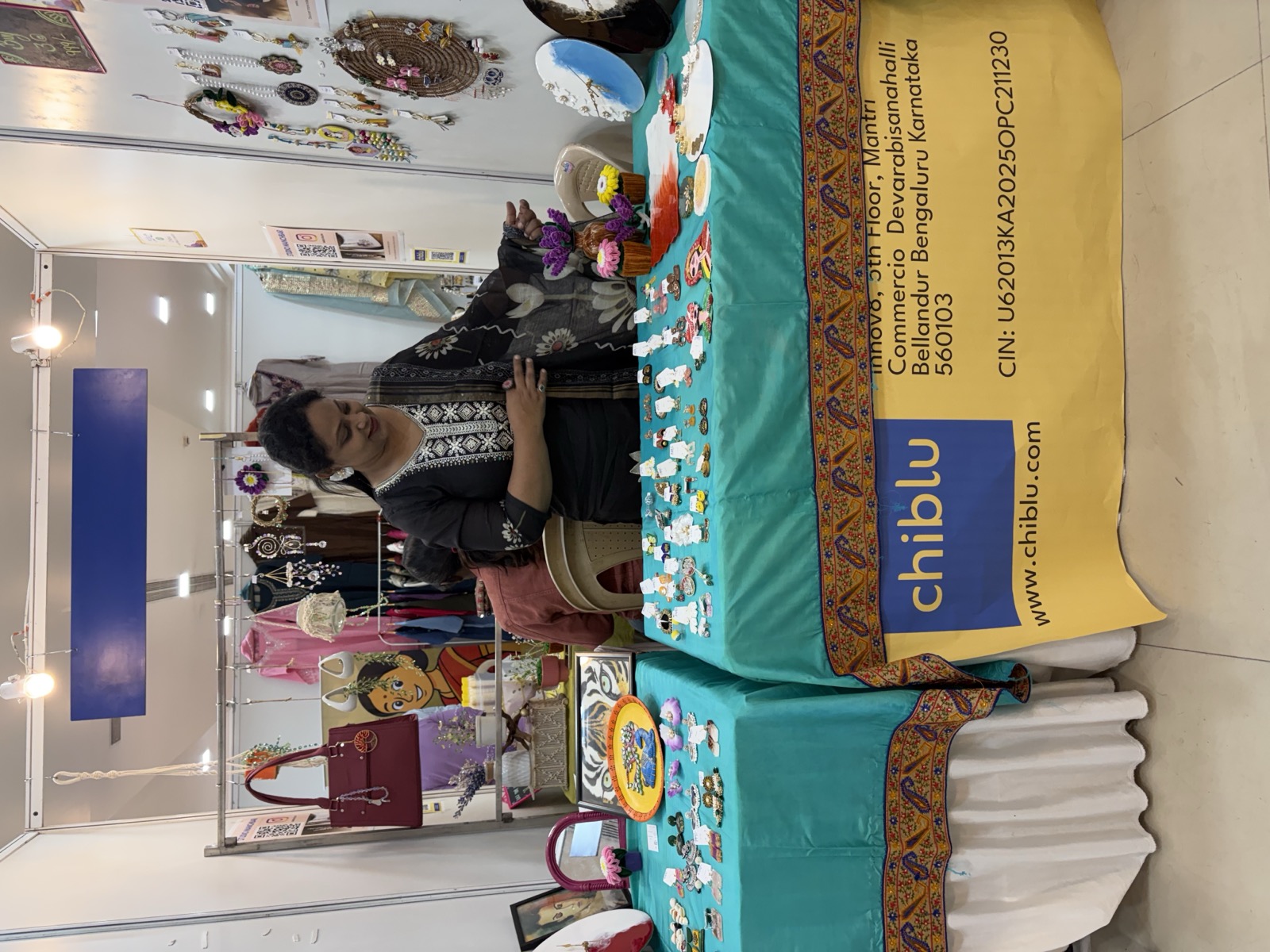
Over two days the same four things came up. Not in the words they had typed into my forms. In the words they used when they were tired.
- DM overload. The whole business ran through Instagram. “I get 30 messages a day. By the time I reply, half of them have bought from someone else.”
- Screenshot chaos. Customers ask for a photo of every variation: this colour, that angle, that fabric, that print. Hundreds of photos a week, mostly to people who never bought.
- No trust in the money. Buyers wanted to pay. Sending UPI to a stranger off an Instagram message felt sketchy. Sales died at the exact moment they should have closed.
- Lost in the crowd. The ones who had tried Amazon, Etsy and Flipkart said the same thing. “We’re listed. Nobody finds us. We’re three pages deep behind someone selling mass-produced versions of the thing we hand-make.”
Discovery stopped too early
I had missed all four. What stayed with me was that they were not four problems.
A directory points a buyer at a maker and then steps back. The conversation, the trust, the payment and the sale all happen after that, somewhere else. For every maker at that pop-up, somewhere else was Instagram DMs. So what I watched over those two days was not a set of gaps in my layout. It was everything that goes wrong once the product steps back.
Chiblu did not need more discovery. Discovery was the part that worked. It stopped too early. I had built a directory with marketplace ambitions.
What I rebuilt
I went back to Bangalore and spent four months rebuilding around one question: what does Chiblu have to own for the sale to happen on it? Four answers came out of those two days.
Storefronts instead of listings
Problem: every variation was a photo sent by hand.
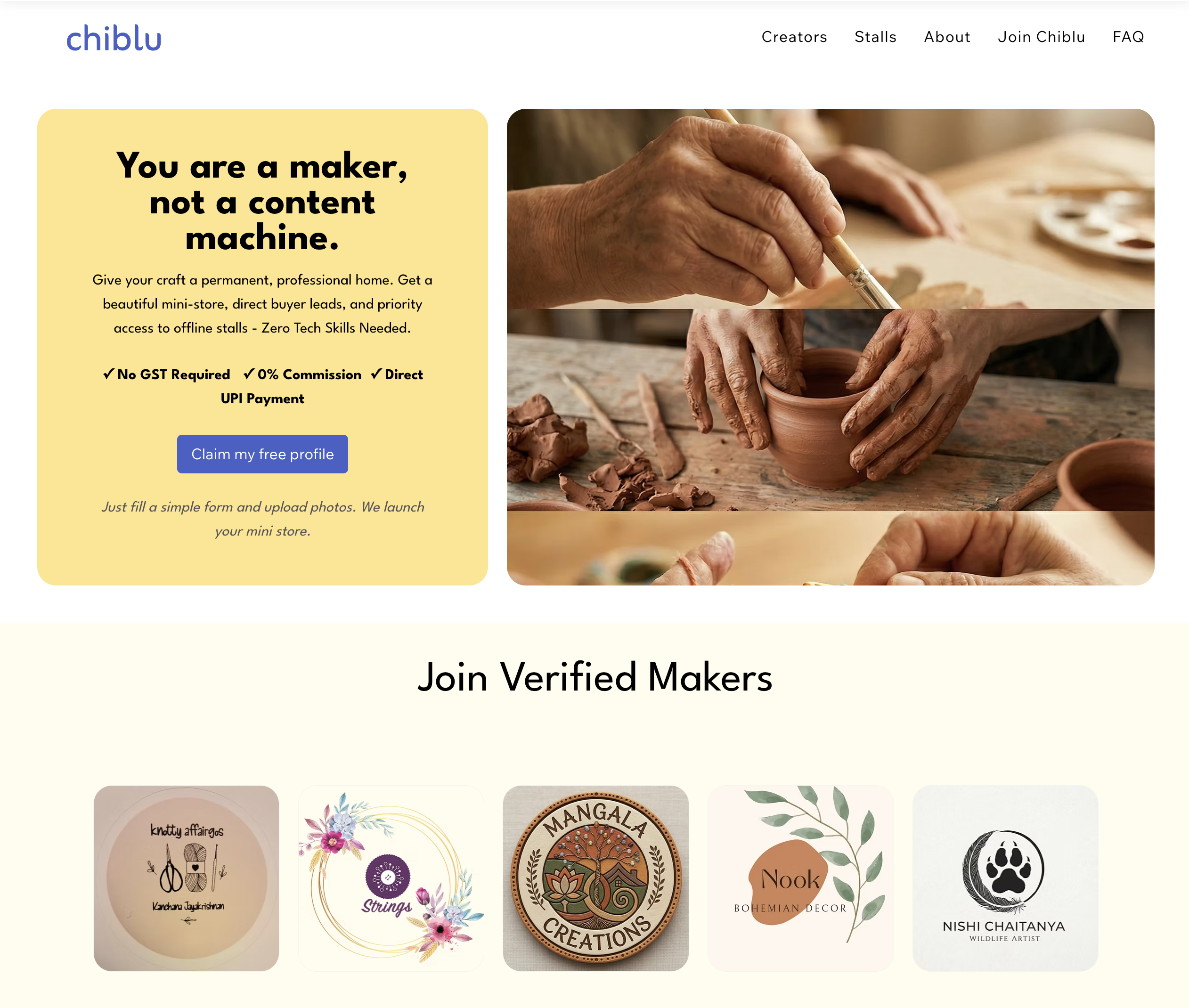
Decision: every maker got a storefront, not a listing. Real product pages, real variants, a URL she could share.
Why: “show me the green one” should cost a link, not a photo shoot.
Indexed from day one
Problem: the makers who had tried the big marketplaces were listed and invisible.
Decision: every product page became its own URL, indexed from the first day.
Why: someone searching “hand-block-printed cotton kurta Jaipur” should land on the maker, not three pages deep behind a machine-made copy of her work.
The platform in the middle
Problem: buyers wanted to pay, and paying a stranger felt like a risk they did not have to take.
Decision: verified sellers, buyer protection, UPI through Chiblu.
Why: a stranger on Instagram cannot vouch for a stranger on Instagram. Standing in the middle of the payment is the one thing a directory structurally cannot do.
A price
Problem: v1 was free, with no model behind it.
Decision: v2 launched with a flat monthly subscription per seller, the same fee for everyone.
Why: once it carried the DMs, the photos, the trust and the discovery, it stopped being something you forget you joined.
(from 13 at launch)
(from 20 at launch)
placed on Chiblu
v2 went live in February and ran until I wound Chiblu down. Those are the numbers it finished on. Every one of those sellers signed up because of one of the four things I only saw by sitting at that table.
Two things stayed with me. Forms tell you what people want. They do not show you what people are doing. Nobody typed “I lose track of twelve conversations while answering one.” I had to watch it happen.
And a product people can use is not the same as a product that does the job. v1 worked. Makers signed up, filled in their pages, browsed the feed. It just did not carry them through the part that pays them.
A directory helps someone find a maker. A marketplace has to help them finish.
See how I designed and built the whole thing: the making of Chiblu.